
ASME GDTM Exam Preparation Guide
If you’re working in mechanical design, manufacturing, inspection, or engineering drawing interpretation, the GDTP (Y14.5) Certification — “Geometric Dimensioning & Tolerancing Professional” — is a credential worth understanding. Below you’ll find a detailed, step-by-step guide: what the certification is, why it matters, how to prepare for the exam, how to apply, what the process is, and how training (for example from Prolotek) can help you succeed.
What is GDTP Certification?
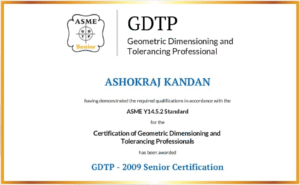
The GDTP certification is offered by ASME and is based on the standard Y14.5 in two versions 1994 and 2009
It demonstrates that an individual has competency in geometric dimensioning and tolerancing (GD&T) — both reading and interpreting engineering drawings, and (in senior levels) selecting and applying GD&T controls.
ASME offers two major levels:
Which exam should you take?
If your current role is largely interpreting drawings (checking, inspecting, manufacturing using drawings) and you don’t (yet) specify GD&T for designs → Technologist is probably the appropriate choice.
If your role involves designing parts, specifying GD&T, working on drawing releases, making decisions about tolerances, datums, inspection strategy, or you want a career path in design engineering → Senior might be the better fit.
If you’re unsure, or you’re earlier in your GD&T journey, starting with Technologist is a safer bet; you can always go for Senior later once you have the required experience.
If your company or industry expects Senior certification (for example you are in aerospace or high-end manufacturing where GD&T specification is critical) then you might aim directly at Senior — but ensure you meet the experience requirement and are comfortable with the depth of content.
If you’re still building your GD&T toolbox (reading drawings, interpreting, but not specifying) → go with Technologist
If you are actively specifying GD&T, selecting datums, designing with GD&T controls, want to lead GD&T practice or are in a senior engineering role → aim for Senior.
Why Get GDTP Certified? (Benefits & Industry Demand)
Benefits
Recognition of competence
Holding a GDTP certification tells employers, peers, and clients that you understand GD&T systematically — its definitions, symbols, modifiers and that you can apply them.
Improved job prospects
Many companies require or strongly prefer engineers/designers/inspectors with GD&T certification because it helps reduce errors, improve quality and ensure fit/function of parts.
Better collaboration & communication
With a standard language (GD&T) you can more effectively communicate design intent, manufacturing requirements, and inspection criteria — both within your company and with suppliers.
Higher quality, fewer errors
Proper GD&T use helps reduce costly rework, scrap, production delays and defects. The certification indicates you have that understanding.
Competitive advantage & credibility
In global supply chains and competitive manufacturing, being certified gives you an edge, helps meet contract requirements and enhances the trust of customers.
Industry Demand
GD&T is used widely in industries where precision engineering, tolerance stacks, assembly fit, functional geometry, supplier drawings and inspection are critical. That includes:
-
Aerospace & defence
The sector relies on GD&T for accuracy in complex, safety-critical components
-
Automotive & mobility
Precision and stringent tolerancing are essential for new vehicles and parts, especially as EV and autonomous technologies emerge
-
Medical devices
With increasing device complexity, reliable GD&T ensures patient safety and regulatory compliance
-
Heavy machinery / equipment manufacturing
where large, complex components require precise assembly, functional reliability, and consistent manufacturability across global suppliers.
-
Industrial Manufacturing
Smart manufacturing and Industry 4.0 trends require robust dimensional control and quality assurance
-
Electronics
Miniaturization in semiconductors and electronics depends on precise dimensional standards.
-
Energy/Utilities
Infrastructure projects benefit from rigorous tolerancing to maintain operational safety and efficiency.
-
Quality / metrology centres
for inspecting and verifying the geometric integrity of manufactured parts.
Exam Know-Hows: What to Expect
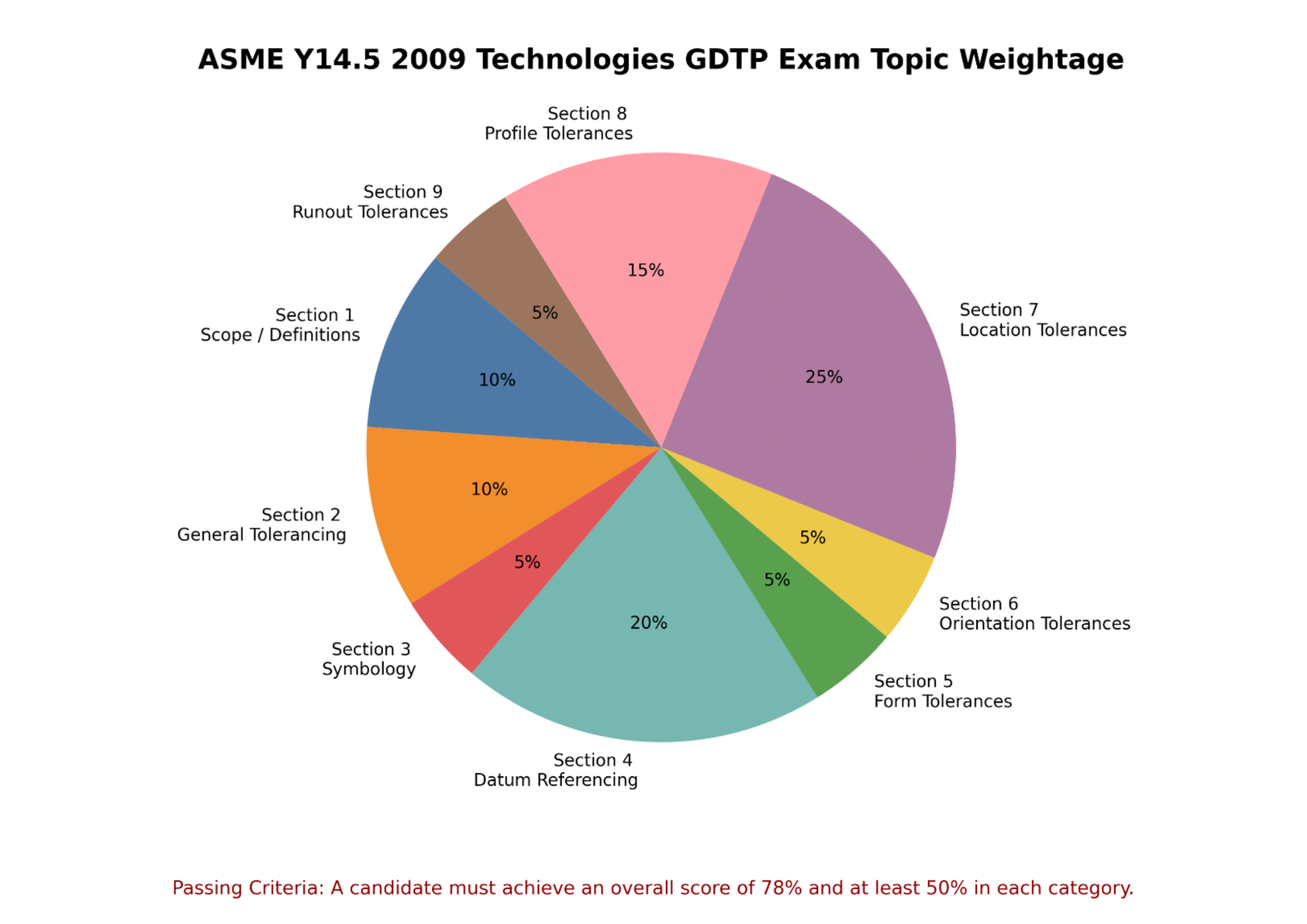
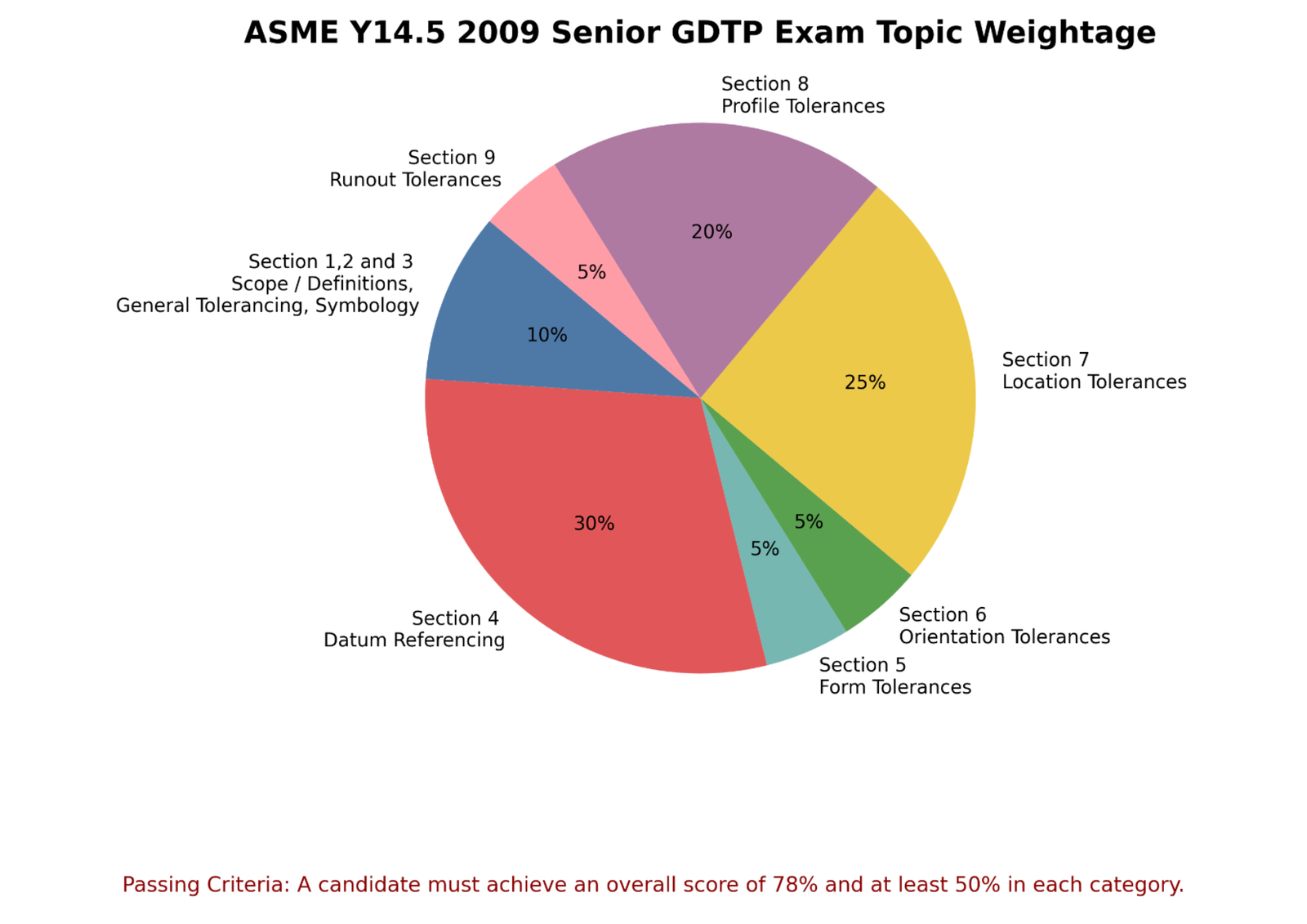
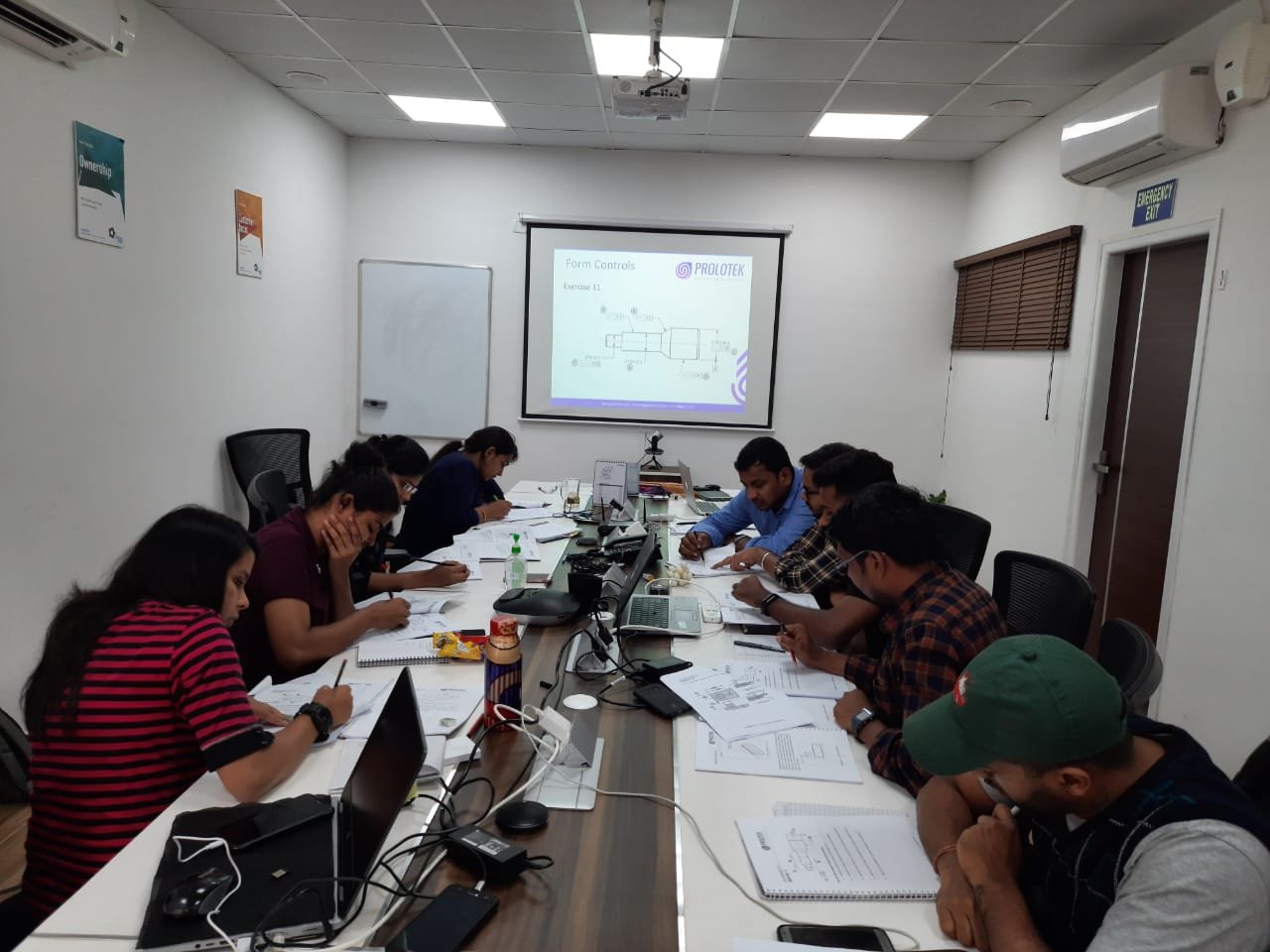
Training & Preparation: Focus on Prolotek
If you’re looking for structured training, Prolotek offers one of the courses tailored for GDTP preparation.
What Prolotek Offers ?
-
Their “GDTP Certification Coaching” program is specifically designed for those preparing for either the Technologist or Senior level GDTP certification.
-
Bonuses included: a “Fundamentals of GD&T” reference book and workbook, access to the instructor for post-program questions via phone/WhatsApp, and two online mock exams to assess strengths and weaknesses.
-
They also provide exam-practice bundles: e.g., 650+ multiple choice questions for the GDTP Technologist Level (ASME Y14.5-2009) with multiple attempts. lms.prolotek.com


How Their Course Fits Your Strategy
-
If your preparation strategy includes using a formal training course, Prolotek offers a targeted one that aligns with exam content.
-
It provides structured content, mock exams, and mentorship which helps you identify and close gaps efficiently.
-
The mock exams help build familiarity with question format and timing.
-
The inclusion of the workbook/reference materials ensures you have materials to review post-class.